
Mental & Emotional
Toolbox Techniques

When life gets stressful or something goes wrong, it can feel like our mind won't stop running or that we can't contain our emotions. We may get stuck worrying about the future or replaying things from our past.
This page contains quick tools to use immediately during intense moments. They help you to slow down, take a moment and come back to the present.
Box Breathing
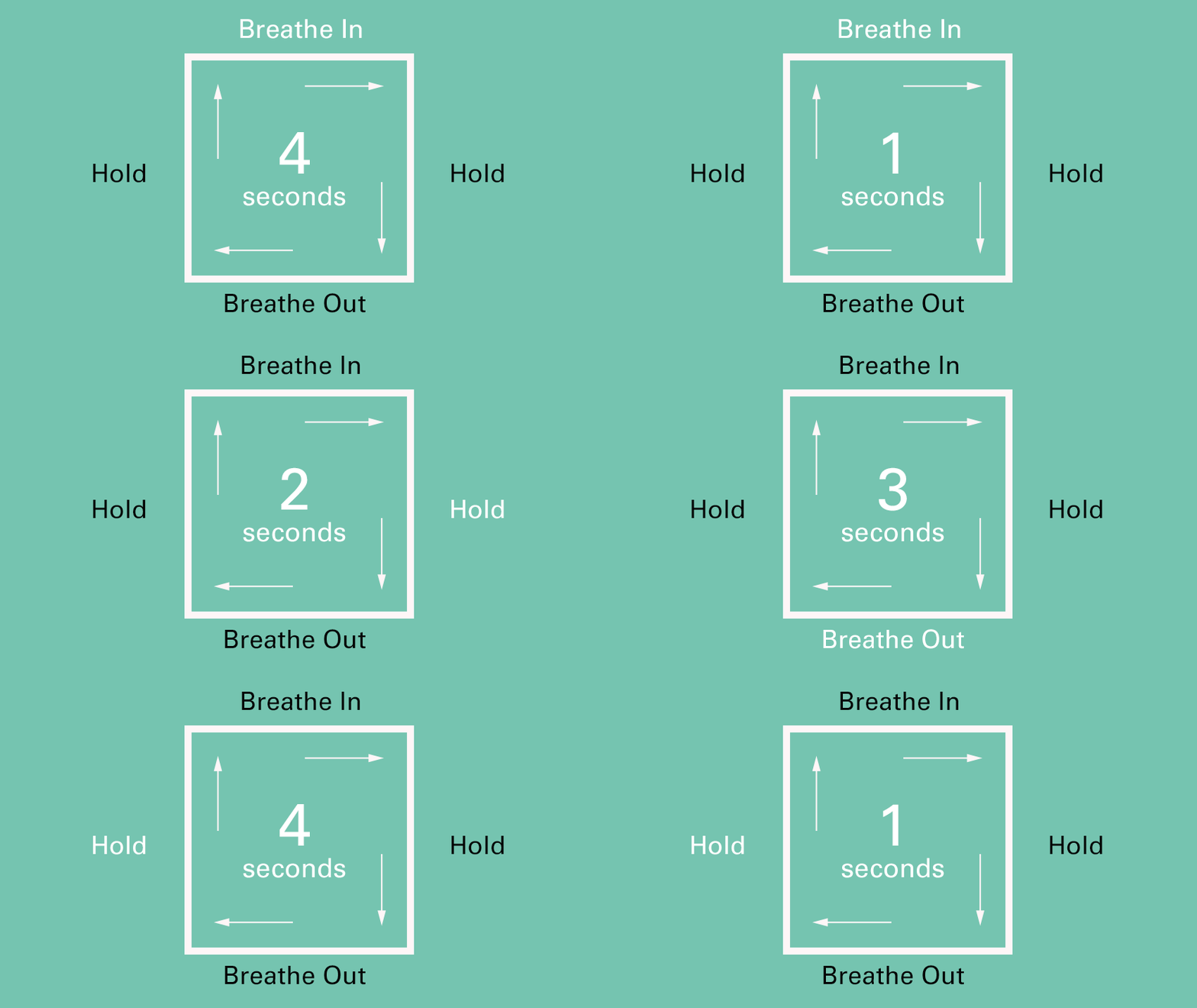
Box breathing is a simple, four-step stress-reduction technique that involves inhaling, holding, exhaling, and holding again, each for a count of four. This 16-second cycle stabilizes breathing, lowers heart rate, and triggers the parasympathetic nervous system, making it an effective, portable tool for calming the mind and body in high-stress situations
Here’s how to do it:
- Breathe in for 4 seconds
- Hold for 4 seconds
- Breathe out for 4 seconds
- Hold for 4 seconds
- Repeat 4 times
5 4 3 2 1 Grounding
You can use this coping technique when feeling anxious. It helps regain focus and calm down.
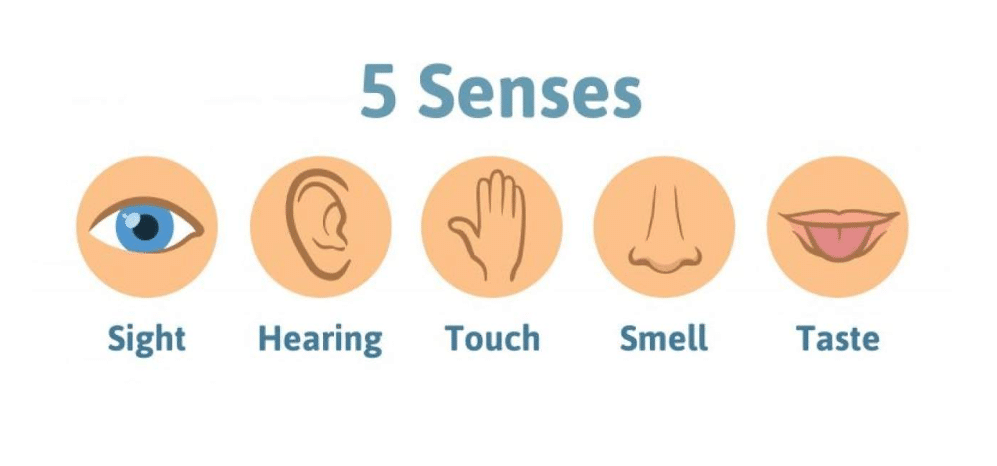
This grounding technique uses your five senses to focus on the moment you are in and helps you to avoid anxious or stressful thoughts that might make the situation worse.
Start with a big belly breath, then
5: Acknowledge FIVE things you see around you. It could be a pen, a spot on the ceiling, anything in your surroundings.
4: Acknowledge FOUR things you can touch around you. It could be your hair, a pillow, or the ground under your feet.
3: Acknowledge THREE things you hear. This could be any external sound. If you can hear your belly rumbling that counts! Focus on things you can hear outside of your body.
2: Acknowledge TWO things you can smell. Maybe you are in your office and smell pencil, or maybe you are in your bedroom and smell a pillow. If you need to take a brief walk to find a scent you could smell soap in your bathroom, or nature outside.
1: Acknowledge ONE thing you can taste. What does the inside of your mouth taste like—gum, coffee, or the sandwich from lunch?
Panic Attacks
A panic attack is a sudden episode of intense fear or discomfort that triggers severe physical reactions—such as a racing heart, shortness of breath, dizziness, or shaking—with no apparent real danger. If you do get panic attacks, here’s what to do. It’s as easy as ABC.
A is for Accept. Use these coping statements to sooth yourself (or help another) during a panic attack. They help you accept that it’s a panic attack, and that it’ll pass.
Try these coping statements: “Seems like I’m having a panic attack. This feeling is uncomfortable but not dangerous” and “This will pass” and “I can get through this”.
B is for Breathe. Do some Box breathing.
C is for Connect. That’s connecting yourself to your senses, or grounding. Do the 5 4 3 2 1 Grounding technique.
We like this video from Mind, a British mental health charity.
Mindfulness
Mindfulness is trying to create some distance between ourselves and our thoughts/feelings, so that we can observe them rather than be caught up in them. Here is a very simple one called Pause, Breathe & Smile.
When you need a calm moment, pause, take a slow deep breath, hold it, count 2 – 3 – 4, slowly breathe out. Now, smile.
This video comes from the Pause Breathe Smile Charitable Trust and the Mental Health Foundation.
Acceptance
We often worry about our problems, thoughts and feelings which makes us feel anxious. We then worry about being worried. And so it escalates with the thoughts themselves becoming over-controlling, and emotions feel permanent.
Acceptance is choosing to adopt an open, curious and receptive attitude to thoughts, emotions, memories and urges as they arise, even when they are unpleasant. This lessens their control over us. They’re still there, but they don’t escalate into a bigger worry.
Russ Harris explains how we have a struggle switch and why we should let it go.
We can flip our struggle switch by riding the wave
Instead of getting caught up and escalating our emotions – we ride the wave while they pass.
Start by identifying the feeling, thought or urge that’s making up the wave. Accept that the feeling exists, allow it to be there, even though it’s unpleasant and you don’t like it. Watch the wave move past and experience that feeling of being on top of the wave rather than the wave crashing down on you.
Breathe in as the wave lifts you up and breathe out as the wave continues on. Ride the wave by repeating this a few times as new waves roll in. Keep breathing in as you go up with the wave and out as the wave passes by.
This video comes from Partners for Children’s Mental Health in Colorado, USA.
If you can cope with guided meditations, try urge surfing with the Pathlight Mood & Anxiety Center.
You can also try to "radically accept" your situation.
This video, narrated by Dr Shireen Rizvi from the DBT Skills from Experts YouTube channel explains the technique of Radical Acceptance:
Progressive Muscle Relaxation
Progressive muscle relaxation is an anxiety-reduction technique. The technique involves alternating tension and relaxation in all of the body's major muscle groups. It takes more time and is less discreet than deep breathing, but its effects can be very powerful. It's also great to try if you can’t sleep.
How to do progressive muscle relaxation
Sit back or lie down in a comfortable position. Close your eyes, if this feels safe and ok for you. Beginning at your feet, notice how your muscles feel. Are they tense, or relaxed?’
Tightly tense the muscles in your feet by curling your toes. Hold the tension for 5-10 seconds. Release the tension from your feet and allow them to relax. Notice how different the states of tension and relaxation feel.
Moving up the different muscle groups in your body, repeat the cycle of tensing and relaxing each group of muscles:
Left leg, Right leg
Buttocks, Stomach, Chest, Back
Left arm, Right arm, Left hand, Right hand
Shoulders, Face.
Dr Emily David, a clinical psychologist in Hampshire Adolescent Mental Health Service (Britain) shows you how to do it.

The Mental Health Foundation also has an audio only Progressive Muscle Relaxation guided exercise in their Small Steps Toolbox.
Or if you want it as a guided meditation, try this one by Woody Schuldt from Therapist Aid in the USA.
Cognitive Defusion
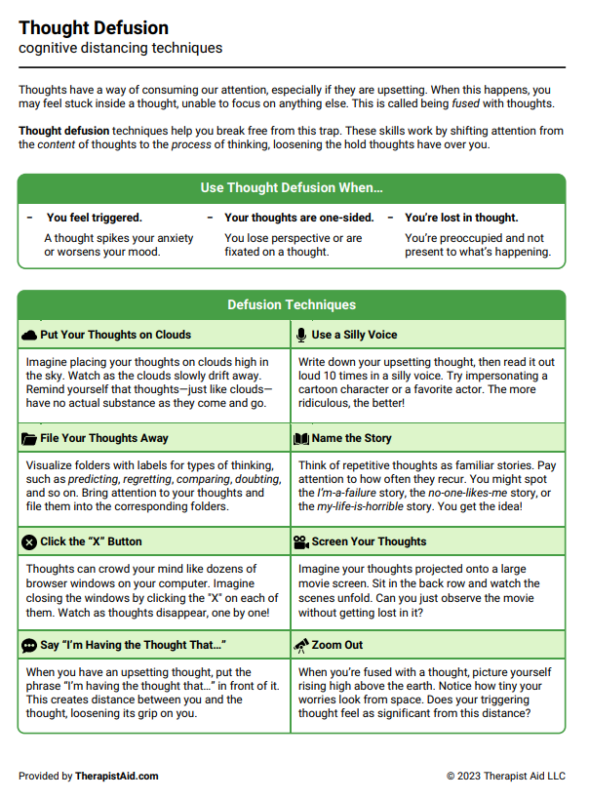
This skill from Acceptance and Commitment Therapy is about creating space between you and your thoughts so they don't automatically control how you feel or what you do.
Check out this video metaphor made by mindifriend on Youtube showing how it works:
Instead of getting caught up in a thought like “I’m not good enough,” defusion helps you notice it as something your mind is saying, not something you have to believe or act on. A small shift like “I’m having the thought that I’m not good enough” can change how it feels. The thought is still there, but it has less grip on you.
Here are some different ways you can practice cognitive defusion:
Catch, Check, Change
Cognitive Behavioural Therapy (CBT) is based on the idea that our thoughts, feelings, and behaviours all affect each other. This means that the way we think about a situation can affect how we feel and what we do next. Thoughts are unhelpful when they stop you acting positively and make you feel worse. Helpful thoughts encourage us to get on with our lives.
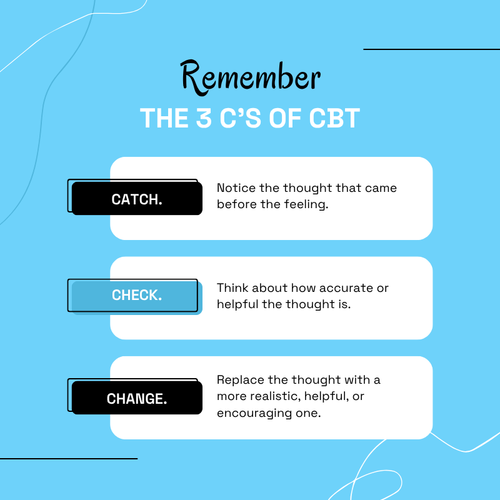
Catch, Check, Change is a technique that helps you challenge unhelpful thoughts instead of automatically believing them.
This Youtube video by RISE explains how it works:
You can follow the steps below to try out the Catch, Check, Change technique for yourself:
Feelings
Have you ever wondered why we have feelings? Or why they can be so complicated?
This animation by Anne Hilde Vassbø Hagen explains our feelings:
Here are two activities you can try to better understand your own feelings.
The Feelings Wheel
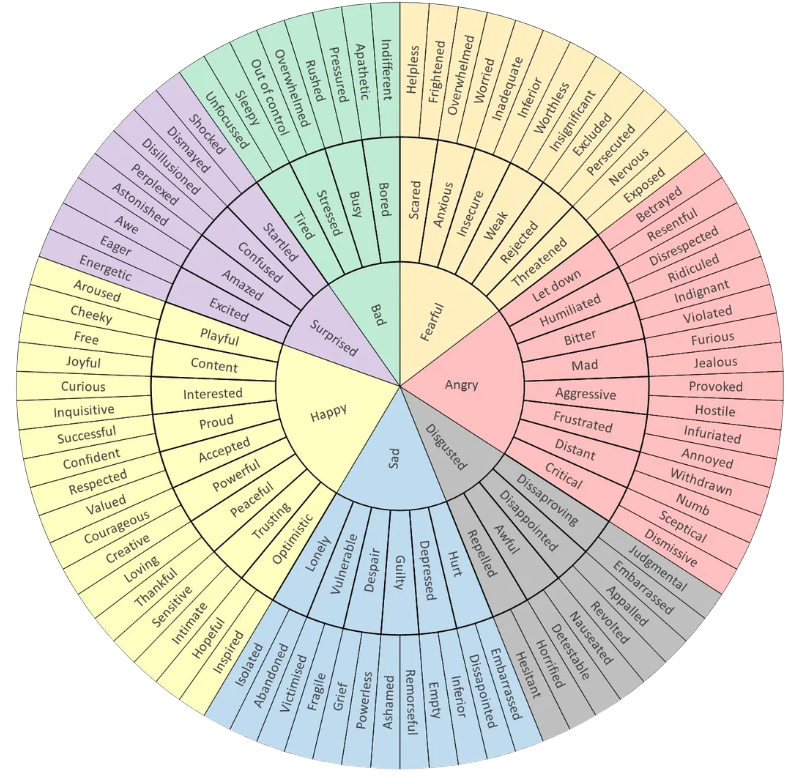
Use this feelings wheel to help identify and describe feelings. Words on the outer ring are more precise and convey more detail and meaning. For example, jealousy is a much different feeling compared to anger.
Mood Journalling
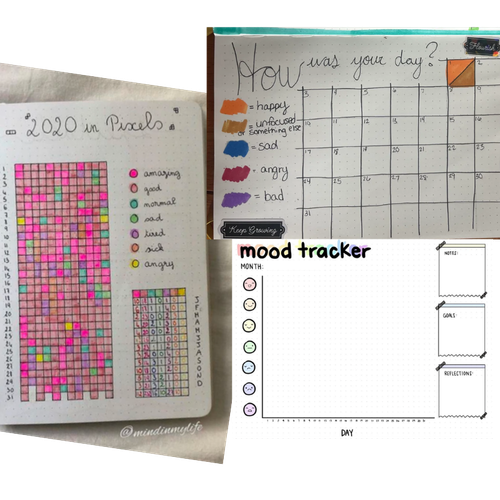
Some people like to keep track of their feelings with a journal. This can help with understanding what influences your mood and you can see what patterns appear. You can also note down the activities you did in a day and how you felt doing them.
Opposite Action
Sometimes our feelings may drive us away from the things that can help us feel better. For example, when we're sad we might withdraw from others. When we withdraw, we miss out on being around the supportive people who can help. In these moments, remembering opposite action may be useful.
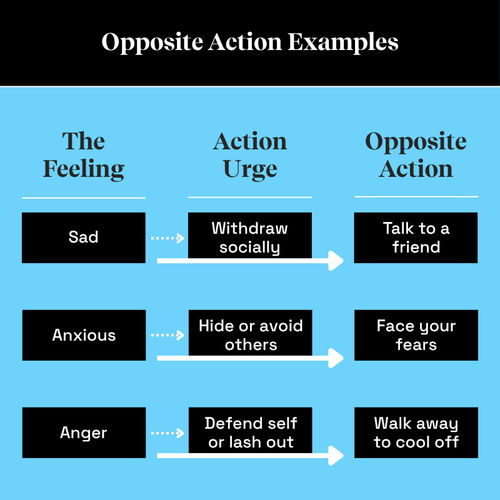
Dr Shireen Rizvi from the DBT Skills from Experts YouTube channel explains how to practice opposite action: