
Physical
Toolbox Techniques

Looking after your physical wellbeing can have a big impact on how you feel mentally and emotionally. When life gets busy, sleep, nutrition and physical activity are often the first things to slip.
That's why we've listed tools on this page to help you build back a healthy routine for better sleep, nutrition and keeping active.
Exercise your way out of your funk
Sometimes when we feel stressed, low, or stuck in our thoughts, our bodies stay still for long periods. We sit on our phones, at school desks, or at home. When our bodies don’t move much, our mood can start to feel heavier too.
When you move your body, your brain releases feel good chemicals called endorphins. These chemicals can improve your mood, reduce stress, and help you feel calmer. When movement becomes part of your routine, it can be a powerful tool for protecting your mental wellbeing.
The great thing about exercise is that you have control over it, and can succeed, whereas you may have no control over your homelife, mood, school or relationships.
The END Goal
Any exercise is better than none, but Health NZ recommends at least 30 minutes of moderate physical activity per day (playing, gardening, cleaning), and to improve mood make it more vigorous (dancing, running, swimming).
Here’s some options for putting some exercise in your life.
Mini Mood Boost
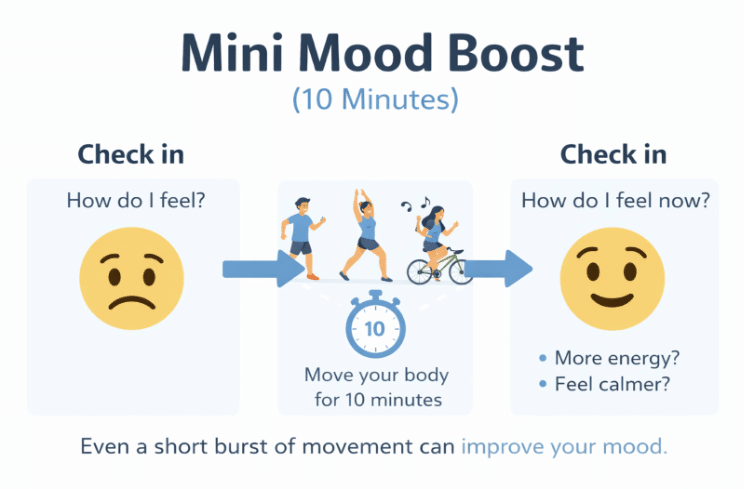
This activity helps you notice how movement can change how you feel. Many people notice they feel a little better after moving, even for a short time.
Pick a simple activity. Choose something easy such as walking, running, at home workout, stretching, dancing, shooting hoops, or riding a bike, etc.
Set a timer for 10 minutes, and Move your body (try to keep moving the whole time)
Check in with yourself. After the 10 minutes, ask yourself: How does my body feel? Has my mood changed at all? Do I feel more energized or calmer?
Just Dance
Why run around the park in shorts when you can dance? 30 minutes dancing gives you all the exercise you’ll need, especially as psychologist Dr. Peter Lovatt says super great for our mental wellbeing.
Search online for Just Dance + your favorite song. Play it and dance along following all the moves. Work your way up to 20 minutes most days. Better still, get your friends along and make it a party.
Free programmes
Nike Training Club. A free app from Nike sports shoes corporation with short workouts you can do at home without equipment.
Couch to 5k. A beginner running programme that slowly builds up fitness over 9 weeks from Britains National Health Service.
Parkrun. A free weekly 5km walk or run held in local parks, open to all fitness levels. Do it with others and meet people.
How to get a good night's sleep
Research shows that good sleep doubles our chance of getting through our depression. That’s a higher hit rate than antidepressants. Great sleep means you wake up refreshed with energy and purpose.
Getting a great nights sleep comes from sleeping long enough and falling asleep in the first place.
When should I go to bed and how long should I sleep?
Use this Sleep Calculator to figure this out. Select the ‘When to Sleep’ button, Enter the time in the “What time do you need to wake up” entry box, Select the green ‘Calculate Bedtime’ button.
We found that the calculator by Women in Balance, a women and health-care professional education organisation was the easier to use.
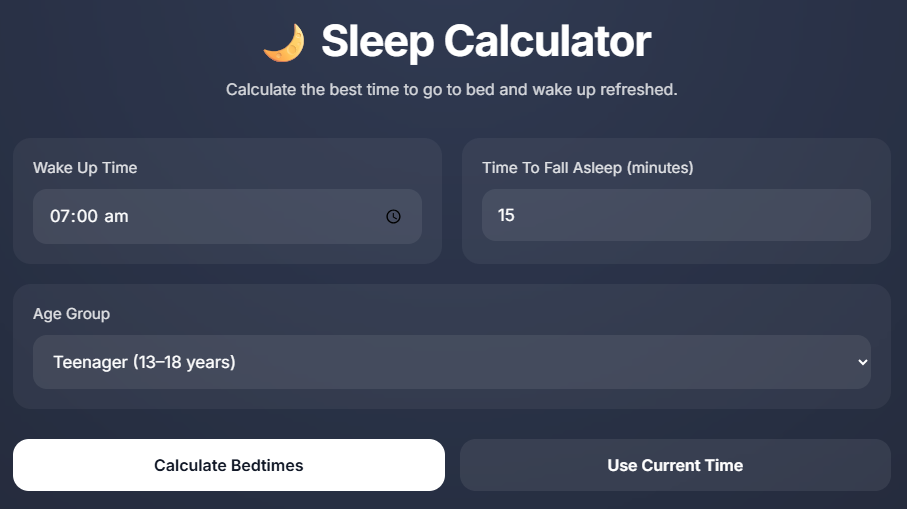
Why this long? Sleep happens in 90 min cycles, and it's normal to wake up after each and then go back to sleep, mostly without remembering you woke up. Generally teens need about 6 cycles per night. 6 cycles is 9 hours. Children an extra cycle.
Healthy Sleep Habits - Create Your Bedtime Routine
If sleep is that important what can we do to get a better night’s sleep? Great sleep comes from developing a sleep routine and the habit reinforcement that bed equals sleeping.
This is about establishing the cognitive association, or habit, that you go do bed to sleep. That is what will get you to sleep in the long run.
This video will help you work out how to get great sleep habits. It’s from Britain’s National Health Service.
One. Set a Routine
Go to bed at a similar time. When’s your regular bedtime now. Start 30 minutes before that.
Remember - 2:00 PM no more caffeine (ask: how long does caffeine stay in your system? It has a half-life of 5 hours, so 10 hours to completely clear). Also no alcohol.
Two. Set a Relaxing Routine
30 minutes before bed start ritual. What will you do to relax? Reading, soft music, shower? No screens now, so where will you put your phone, or put on silent.
If worry about stuff while in bed recommend writing down your worries or doing a diary, and then write the next day’s task list. So you don’t have to think about these things.
Three. Sleep Hygiene
How will you make it dark. How will you make it Quiet? Do you need earplugs. Is your room a little cool.
Bed is just for sleeping. Not for reading, not for messaging. Go to bed, go to sleep. Form the habit.
Four. Most Effective Strategy when you can’t fall asleep
Get up, Read something boring, listen to soft music or do that a task list for tomorrow. Go back to bed when sleepy. Don’t force it.
This is hard. Especially if your house is cold over winter. But it’s the number one most effective strategy of training your mind that you go do bed to sleep.
Boost your mental health with nutrition
Get the nutrition you need to boost your mental health. Lack of nutrients such as iron, can keep you feeling low. Vitamin D supports mood, zinc helps regulate your moods, tryptophan helps regulate anxiety and magnesium helps with relaxation.
Get your Micronutrients by eating a wide range of real food
The great news from Dr Julia Rucklidge’s mental health and nutrition research is eating a board range of whole foods may support mental health more than buying expensive supplements.
Eat a wide range of food
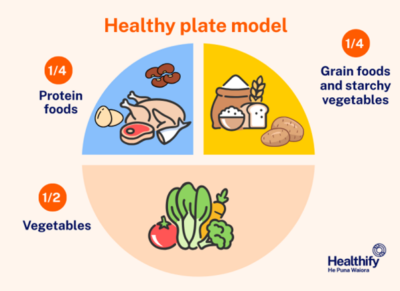
Te Whatu Ora (Health NZ) recommends this is what your dinner plate should look like. That's 1/2 for vegetables or salad, 1/4 for protein and 1/4 for grains or starchy vegetables made up of carbs like potatoes or kumara.
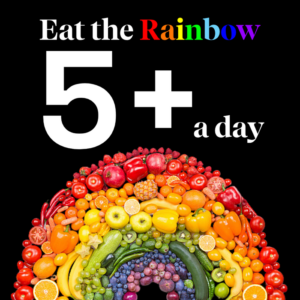
If the plate is too hard to follow, try the World Health Organisation recommendation of 5+ servings of different coloured fruit and vegetables a day.
Eat real food
Real Food is all those foods that have not been industrially processed or foods that have not had their natural qualities interfered with or the quality of their composition reduced. Such as food made at home, especially using wholefoods.
Worried about eating too much processed food and not enough nutrients?
If you’re really worried that you’re not getting enough nutrients take Psychology Todays nutrition test.
Finding it hard to stop eating processed food. Here’s why we can’t stop.
One way to reduce overeating processed food is by practicing Mindful eating. Headspace from the USA recommends using a hunger scale of where you eat when you’re feeling 3 out of 5 full and finishing when you’re 7 out of 10 full.