
Handling Heavy Feelings
Toolbox Techniques

When we think we’re under threat or experience extreme stress, our big feelings can take over. That’s our survival brain (the amygdala) taking over from our pre-frontal cortex that handles relating and logic.
Those big feelings tend to make you hyper; angry, anxious, panicked, or full of high energy. You want to fight or run away. Or else your system shuts down. You feel numb, disconnected, exhausted, or depressed. Try these tools to help calm or ground yourself. Then you'll be in a better space to discuss or decide something.
Calming tools for when we’re feeling hyper-anxious:
Grounding tools for when we’re feeling hyper-anxious:
Body Breathing
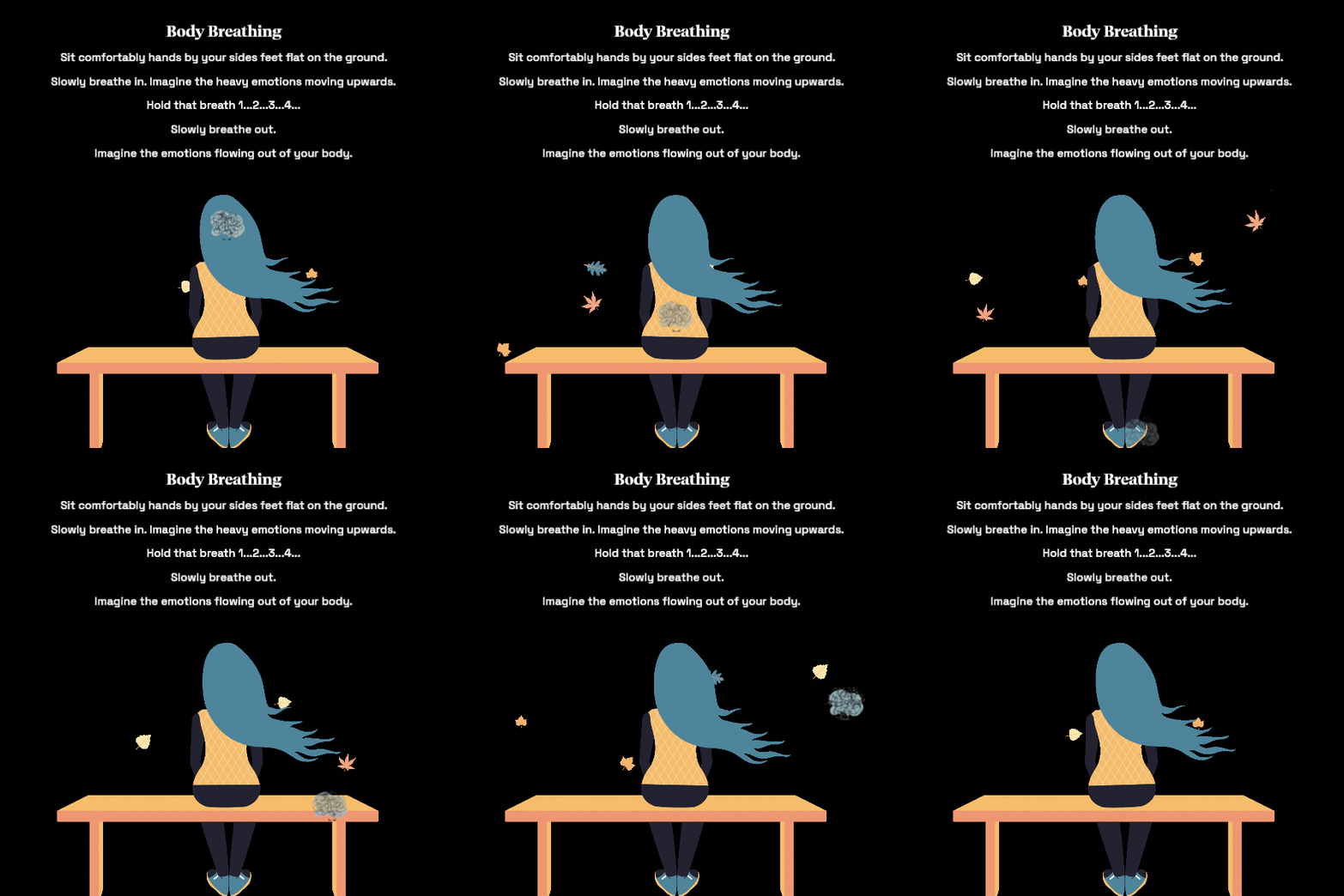
Full body breathing relieves stress by putting your focus on your breathing and visualising the stress leaving your body.
Sit comfortably with your hands resting by your sides and your feet flat on the ground.
Take a slow breath in for 4 seconds. As you breathe in, imagine the heavy emotions you’re carrying moving up toward the top of your head. Notice your lungs filling up us the emotions pass through.
Hold that breath gently for about four seconds.
Now slowly breathe out over 4 seconds, imagining those emotions flowing from the top of your head, down through your lungs and body, and out through your feet into the ground.
Hold your breathe again for 4 seconds.
Repeat this cycle four times, focusing solely on your breath and your body's movement.
Box Breathing
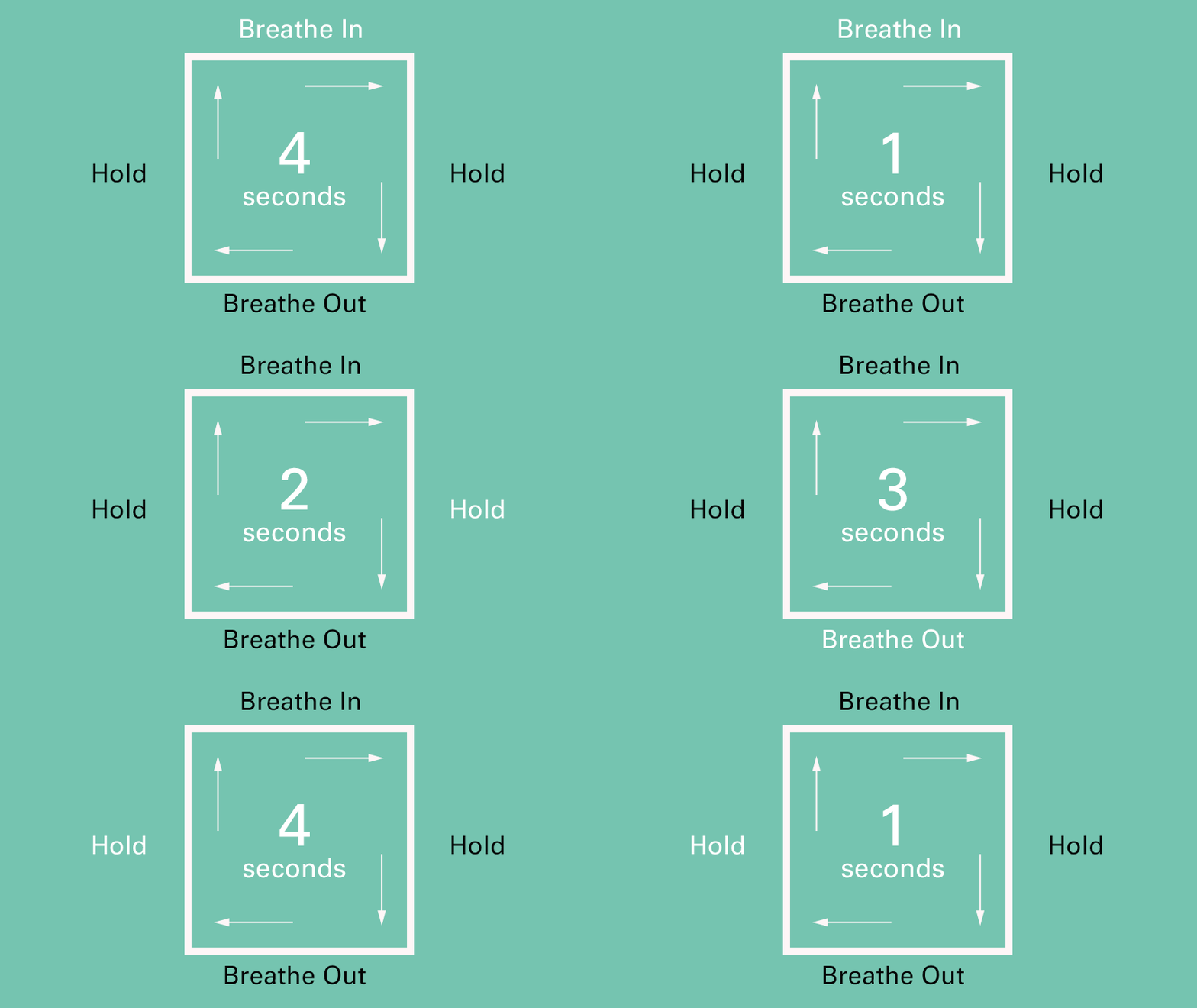
Box breathing is a simple, four-step stress-reduction technique that involves inhaling, holding, exhaling, and holding again, each for a count of four. This 16-second cycle stabilizes breathing, lowers heart rate, and triggers the parasympathetic nervous system, making it an effective, portable tool for calming the mind and body in high-stress situations
Here’s how to do it:
- Breathe in for 4 seconds
- Hold for 4 seconds
- Breathe out for 4 seconds
- Hold for 4 seconds
- Repeat 4 times
Panic Attacks
A panic attack is a sudden episode of intense fear or discomfort that triggers severe physical reactions—such as a racing heart, shortness of breath, dizziness, or shaking—with no apparent real danger. If you do get panic attacks, here’s what to do. It’s as easy as ABC.
A is for Accept. Use these coping statements to sooth yourself (or help another) during a panic attack. They help you accept that it’s a panic attack, and that it’ll pass.
Try these coping statements: “Seems like I’m having a panic attack. This feeling is uncomfortable but not dangerous” and “This will pass” and “I can get through this”.
B is for Breathe. Do some Box breathing.
C is for Connect. That’s connecting yourself to your senses, or grounding. Do the 5 4 3 2 1 Grounding technique.
We like this video from Mind, a British mental health charity.
Progressive Muscle Relaxation
Progressive muscle relaxation is an anxiety-reduction technique. The technique involves alternating tension and relaxation in all of the body's major muscle groups. It takes more time and is less discreet than deep breathing, but its effects can be very powerful. It's also great to try if you can’t sleep.
How to do progressive muscle relaxation
Sit back or lie down in a comfortable position. Close your eyes, if this feels safe and ok for you. Beginning at your feet, notice how your muscles feel. Are they tense, or relaxed?’
Tightly tense the muscles in your feet by curling your toes. Hold the tension for 5-10 seconds. Release the tension from your feet and allow them to relax. Notice how different the states of tension and relaxation feel.
Moving up the different muscle groups in your body, repeat the cycle of tensing and relaxing each group of muscles:
Left leg, Right leg
Buttocks, Stomach, Chest, Back
Left arm, Right arm, Left hand, Right hand
Shoulders, Face.
Dr Emily David, a clinical psychologist in Hampshire Adolescent Mental Health Service (Britain) shows you how to do it.
Or if you want it as a guided meditation, try this one by Woody Schuldt from Therapist Aid in the USA.
Butterfly Hugs
We would like to introduce you to a somatic skill that can help you to calm and group yourself when needed.
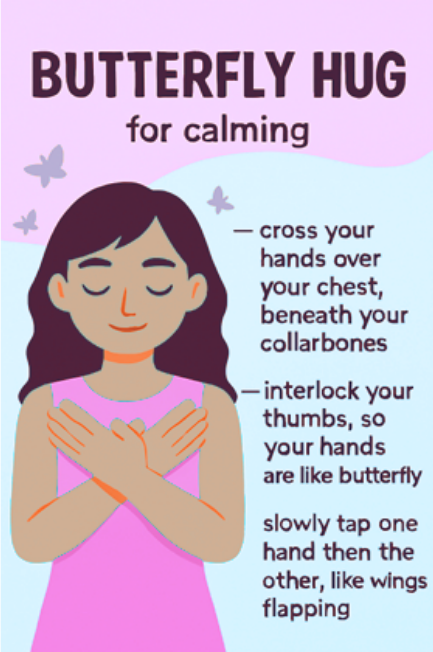
The Butterfly Hug is a body-based technique that can help us move towards calm when we are stuck in an agitated or “too hot” sympathetic nervous system state.
To get into position for the butterfly hug, cross your arms over your chest, so each hand is under the opposite collarbone. Position your fingertips just under the collarbone—you can also interlock your thumbs if that feels more comfortable.
In this position, slowly and gently tap your left hand, then your right, alternating taps on each side for as long as feels helpful.
Here is a video guide by TYF Support Group, if you would like to do this exercise alongside someone:
Cold Grounding
Cold Grounding is a physical way to break out of intense emotions.
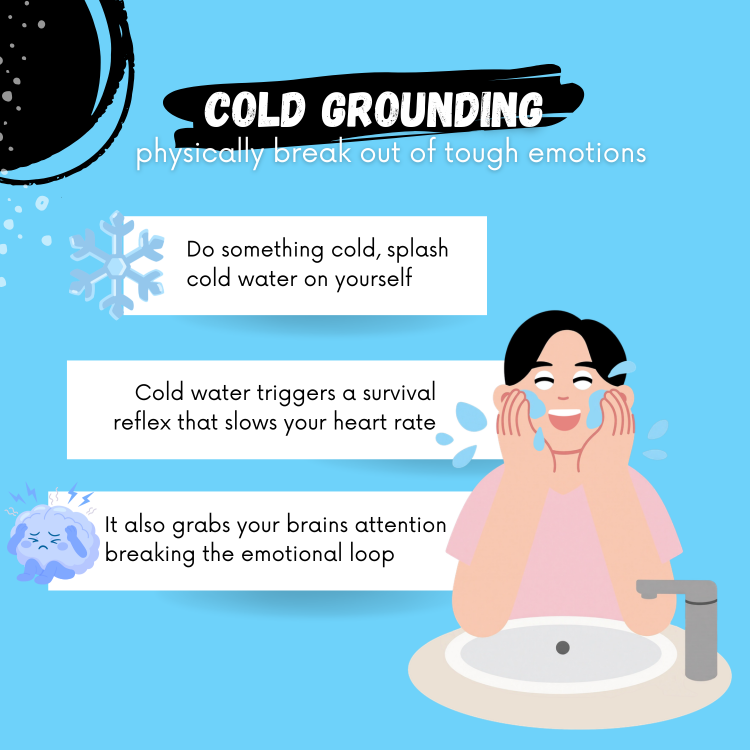
There’s real science behind why it works. Cold exposure activates the body’s “calm switch” by triggering the mammalian dive reflex. This is a built-in survival response (especially strong in marine mammals like seals) that kicks in best when the face is exposed to cold water.
When this reflex is triggered, the body automatically responds by slowing the heart rate — often by around 10–25%. This reduces the heart’s workload and begins to bring the body out of a heightened stress state. It's designed to prevent drowning, helping you to stay calm.
Cold grounding interrupts this panic stress loop by forcing the body into a calmer state.
The Ice Block technique
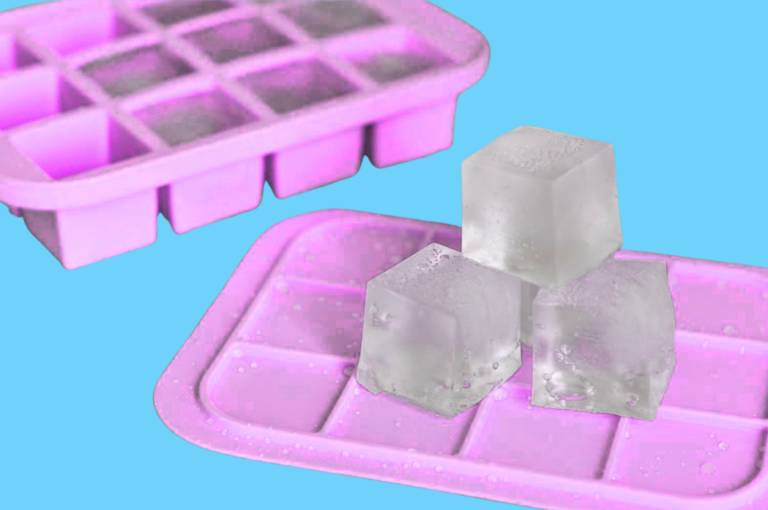
Jade, the psychologist and youth specialist who peer reviewed this toolbox, says her favourite and super effective grounding technique is sucking on a cube of ice.
While it melts in your mouth, focus on the intense cold. That will interrupt your anxiety or panic.
Star Jumps & Running on the Spot
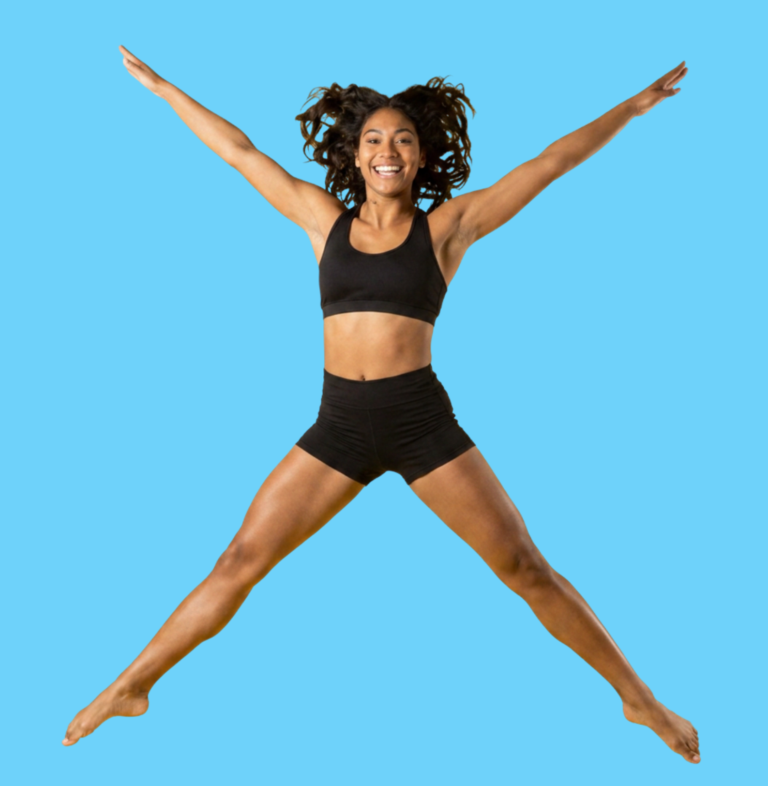
Doing 20 star jumps is an effective grounding technique because it rapidly shifts your focus from an anxious mind to your physical body. It increases your heart rate, burns off stress energy, and releases feel-good chemicals that break the cycle of panic.
How to Do Star Jumps
- Stand up straight with your feet together and arms at your sides.
- Jump up and spread your feet wide while clapping your hands over your head.Land softly on your feet and jump back to the start position.
- Count each jump up to 20.
- Notice how your breathing and heartbeat feel when you stop.
Running on the Spot
Running on the Spot works just as well.
Focus on the physical sensations of your feet striking the ground to anchor your mind in the present moment.

Skip your way out of your mood
Or you can return to your childhood joy of skipping.
Grounding with a skipping rope connects you to the present moment by forcing your mind to coordinate with the physical rhythm, impact, and sound of every jump.

5 4 3 2 1 Grounding
You can use this coping technique when feeling anxious. It helps regain focus and calm down.
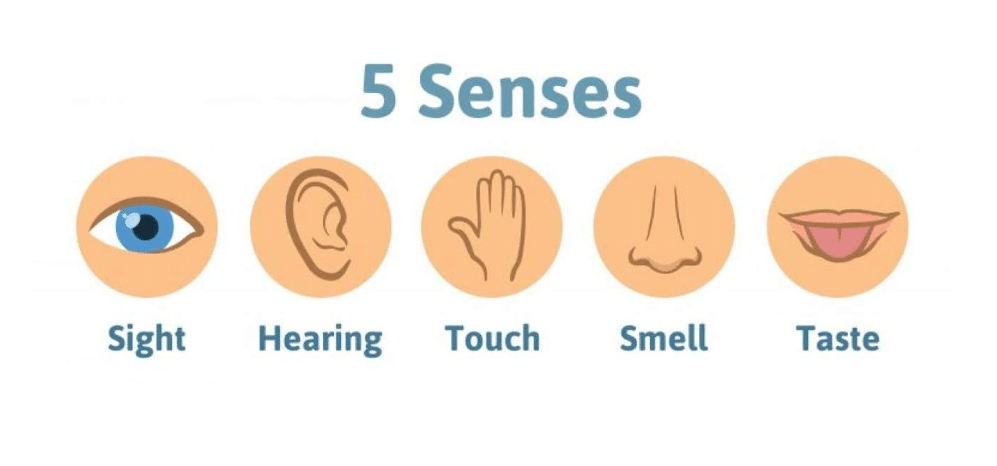
This grounding technique uses your five senses to focus on the moment you are in and helps you to avoid anxious or stressful thoughts that might make the situation worse.
Start with a big belly breath, then
5: Acknowledge FIVE things you see around you. It could be a pen, a spot on the ceiling, anything in your surroundings.
4: Acknowledge FOUR things you can touch around you. It could be your hair, a pillow, or the ground under your feet.
3: Acknowledge THREE things you hear. This could be any external sound. If you can hear your belly rumbling that counts! Focus on things you can hear outside of your body.
2: Acknowledge TWO things you can smell. Maybe you are in your office and smell pencil, or maybe you are in your bedroom and smell a pillow. If you need to take a brief walk to find a scent you could smell soap in your bathroom, or nature outside.
1: Acknowledge ONE thing you can taste. What does the inside of your mouth taste like—gum, coffee, or the sandwich from lunch?